Are your LinkedIn posts getting scrolled past faster than a bad pitch deck? Stop it. Right now. You’re a founder. Your time is currency. And if your first line isn’t grabbing attention, you’re flushing that currency down the drain.
LinkedIn isn’t just a networking site. It’s a powerhouse for founders: a launchpad for fundraising, a magnet for top-tier talent, a pipeline for early leads, and a stage for building your undeniable authority. But in a feed overflowing with content, simply posting isn’t enough. You need to dominate the scroll.
This isn’t just a guide. It’s your blueprint to unlocking LinkedIn’s full potential. You’ll learn the secret sauce behind scroll-stopping hooks, dive into 50 battle-tested examples, discover real-world growth playbooks, and even see how AI can supercharge your content creation. Get ready to transform your LinkedIn game from invisible to indispensable.
Why LinkedIn Hooks are Non-Negotiable for Founders
The “Scroll-Stopping” Imperative
Your first line is everything. It’s the gatekeeper. It determines if someone stops, clicks “see more,” or just keeps scrolling. If you don’t nail that hook, the rest of your brilliant content, your insights, your product — all of it — becomes invisible. Simple as that.
Drive Core Founder Goals
Forget vanity metrics. A powerful hook isn’t just for likes; it’s for results.
- Attracting Investors & Partners: Hook them with your audacious vision, undeniable traction, or unique market insight.
- Recruiting Top Talent: Show them why your mission is the one worth joining, not just another job.
- Generating Early Leads & Sales: Speak directly to your ideal customer’s deepest pain point, then offer the glimmer of a solution.
- Building Authority & Personal Brand: Establish yourself as the undisputed go-to expert in your niche.
Beyond Engagement: The Path to Conversion
A great hook doesn’t just get engagement. It’s the first domino. It leads to profile visits, sparks conversations in the comments, and drives direct messages. These aren’t just interactions; they are pathways to real conversions: investor meetings, candidate interviews, and discovery calls that close deals.
Growth Research Deep Dive: Data & Industry Benchmarks
The attention economy on LinkedIn is brutal. Users spend an average of 7-11 minutes per session, but their feeds are saturated. This makes the first 1-2 seconds critical for stopping the scroll. Miss that window, and you’re gone.
Posts with highly engaging hooks (think problem-solution, intriguing questions, bold claims) can see a 20-30% higher “see more” CTR compared to generic openings. That’s not just a click; that’s more eyes on your full message. More content consumption.
While average organic LinkedIn post engagement rates hover around 2-3% (HubSpot, Rival IQ), founder content that leverages personal stories, vulnerability, or direct value propositions in the hook can achieve 8-10% engagement rates or higher. This significantly amplifies your reach, pushing your message to a wider, more receptive audience.
Conversion Impact for Founders: Real Numbers. Real Growth.
- Lead Generation: Founders leveraging LinkedIn for B2B lead generation report up to 3x higher conversion rates from connection to initial meeting when their profile and posts consistently use compelling hooks that address target audience pain points. This means less chasing, more converting.
- Fundraising: Founders who actively share their journey and insights with strategic hooks (e.g., “Lessons from raising a pre-seed round”) report a 40% higher success rate in securing initial meetings with investors compared to cold outreach alone. You don’t get a second chance at a first impression – make it count.
- Talent Acquisition: Posts announcing hiring opportunities with specific, value-driven hooks (e.g., “Tired of bureaucracy? Build something legendary with us…”) can reduce time-to-hire by up to 25% by attracting highly motivated candidates. They want to be there, not just fill a seat.
The psychology of the hook is simple: it taps into curiosity, self-interest, or emotional triggers. Data shows that questions, statistics, and relatable problems generate 15-25% higher comment rates and dwell time. Use it. Relentlessly.
The Anatomy of a High-Converting LinkedIn Hook
Every powerful hook has a core mechanism. Master these seven types.
Problem/Solution Statement
Address a pain point directly. Immediately offer a hint of the answer. People are wired to solve problems.
Intriguing Question
Spark curiosity. Invite interaction. Make them pause and think, “What’s the answer?”
Bold Claim or Statistic
Grab attention with data. Challenge assumptions. State a strong, undeniable opinion that makes heads turn.
Personal Story or Vulnerability
Build connection. Show your human side. Relatability is a superpower on LinkedIn, breaking down professional barriers.
Value Proposition
Immediately state what the reader will gain. Why should they care right now? What’s in it for them?
Contrarian View
Challenge conventional wisdom. Stand out by disagreeing (with compelling evidence!). Make them think differently, making you unforgettable.
The “How-To” Promise
Offer a solution or a guide. People crave actionable advice. Promise to deliver it, making you a trusted resource.
50 Proven LinkedIn Hook Examples for Founders (Categorized for Impact)
This is where the rubber meets the road. Stop guessing. Start captivating.
Hooks for Attracting Investors & Funding
- 1. “Most VCs look for X, but we just hit Y (the real metric that matters).” (Bold Claim/Data) –Why it works: Challenges norms, offers unique insight. Use case: Post-funding round update, pre-pitch awareness.
- 2. “We closed our seed round in 3 weeks. Here are the 3 non-negotiable things we did differently.” (How-To Promise) –Why it works: Offers a proven blueprint. Use case: Sharing fundraising lessons.
- 3. “Your next 10x investment opportunity isn’t in AI alone. It’s in the infrastructure powering it.” (Contrarian View) –Why it works: Positions your niche as overlooked and high-potential. Use case: Pre-pitch investor interest.
- 4. “What if you could turn [industry problem] into [massive opportunity]? We’re building that future.” (Intriguing Question/Vision) –Why it works: Paints a compelling future state. Use case: Early-stage vision sharing.
- 5. “Our MVP just crossed $X MRR in [short time]. Here’s the growth loop we engineered.” (Data/Value Prop) –Why it works: Demonstrates clear traction. Use case: Milestones, proof of concept.
- 6. “Last month, 4,000 users churned from competitor X. We know why. And we fixed it.” (Problem/Solution) –Why it works: Identifies a market gap with a competitive edge. Use case: Market analysis, competitor insight.
- 7. “We’re betting big on [niche trend]. Most analysts miss the ‘why’ behind its exponential rise.” (Bold Claim/Contrarian) –Why it works: Establishes thought leadership, reveals hidden insight. Use case: Trend analysis, strategic positioning.
- 8. “Raising capital isn’t about pitching. It’s about storytelling. Here’s our brutally honest journey.” (Personal Story/Vulnerability) –Why it works: Builds trust and relatability. Use case: Sharing founder journey, securing intros.
Hooks for Recruiting Top Talent
- 9. “Tired of working on boring projects? We’re hiring engineers to build the future of [impactful area].” (Problem/Solution) –Why it works: Speaks directly to developer pain points. Use case: Job opening, culture spotlight.
- 10. “We don’t just ‘value’ work-life balance. We engineer it. Here’s how our team actually thrives.” (Contrarian View/Value Prop) –Why it works: Challenges typical corporate platitudes. Use case: Culture promotion, hiring.
- 11. “What if your code could directly impact [millions of users/world problem]? Join us.” (Intriguing Question/Vision) –Why it works: Appeals to purpose-driven individuals. Use case: High-level hiring, mission statement.
- 12. “Our team just shipped [major feature] in half the industry standard time. Want to know our secret?” (Bold Claim/Intriguing Question) –Why it works: Showcases team efficiency and invites curiosity. Use case: Team success, hiring.
- 13. “Warning: If you hate challenging problems and rapid growth, our Head of Product role isn’t for you.” (Contrarian/Bold Claim) –Why it works: Filters for ideal candidates, creates intrigue. Use case: Specific role hiring.
- 14. “I failed twice before building [Startup Name]. That’s why we celebrate mistakes here.” (Personal Story/Vulnerability) –Why it works: Promotes a growth mindset culture. Use case: Culture video, values statement.
- 15. “We’re looking for [role title] who want to own a piece of the future, not just a job title.” (Value Prop/Bold Claim) –Why it works: Emphasizes ownership and impact. Use case: Attracting entrepreneurial talent.
- 16. “Your next career move should define an industry. Not just fill a seat. Let’s talk.” (Value Prop/Intriguing) –Why it works: Appeals to ambitious professionals. Use case: Executive hiring, talent scouting.
Hooks for Generating Leads & Sales
- 17. “Stop losing customers to [common competitor flaw]. Here’s how we help you win them back.” (Problem/Solution) –Why it works: Directly addresses a competitor’s weakness. Use case: Product comparison, sales enablement.
- 18. “Did you know [surprising stat about industry inefficiency]? We’re fixing it with .” (Bold Claim/Data) –Why it works: Highlights a hidden problem and offers a direct solution. Use case: Industry insights, product announcement.
- 19. “If your [target user] isn’t saying ‘this changed everything,’ you’re doing it wrong.” (Contrarian View/Bold Claim) –Why it works: Sets a high standard, subtly implies your product meets it. Use case: Testimonial lead-in, value statement.
- 20. “How [customer type] achieved [impressive result] in [timeframe] using our .” (How-To Promise/Value Prop) –Why it works: Concrete, quantifiable success story. Use case: Case study, feature launch.
- 21. “Forget ‘best practices.’ What if your sales process could predict buying intent before they even click?” (Intriguing Question/Vision) –Why it works: Appeals to desire for competitive advantage. Use case: Product demo invite, thought leadership.
- 22. “We just saved [Company X] 20+ hours a week on [painful task]. Here’s their secret weapon.” (Value Prop/Case Study) –Why it works: Specific, relatable benefit. Use case: Client spotlight, lead gen.
- 23. “Your content marketing is probably burning money. Here’s the 1 metric you’re overlooking.” (Bold Claim/Problem) –Why it works: Calls out a common failure, promises a solution. Use case: Marketing advice, lead magnet.
- 24. “Struggling to [achieve specific goal]? Most people try X. We found a better way.” (Problem/Solution/Contrarian) –Why it works: Validates their struggle, offers a superior path. Use case: Solution pitch, content promo.

Hooks for Building Thought Leadership & Authority
- 25. “Everyone’s talking about AI, but no one’s talking about [overlooked ethical issue]. Let’s change that.” (Contrarian View/Problem) –Why it works: Positions you as a critical thinker. Use case: Industry commentary, ethical AI discussions.
- 26. “I just spent 100 hours researching [complex topic]. Here are 3 insights that blew my mind.” (Personal Story/How-To) –Why it works: Establishes expertise and offers digestible learnings. Use case: Research summary, trend analysis.
- 27. “The ‘future of work’ isn’t remote vs. office. It’s [bold, new paradigm]. Here’s why.” (Bold Claim/Contrarian) –Why it works: Provokes thought, challenges status quo. Use case: Trend prediction, thought piece.
- 28. “What if your biggest competitor isn’t another company, but your own assumptions?” (Intriguing Question/Contrarian) –Why it works: Encourages introspection and deeper thinking. Use case: Philosophical post, strategy advice.
- 29. “This single data point from [new report] confirms everything I’ve been saying about [industry trend].” (Data/Bold Claim) –Why it works: Reinforces existing authority with new evidence. Use case: Report analysis, market insight.
- 30. “My take on the [recent industry event/news]: Everyone got it wrong. Here’s what really happened.” (Contrarian View/Bold Claim) –Why it works: Positions you as having unique, informed perspective. Use case: News commentary.
- 31. “The biggest mistake founders make when scaling? Ignoring the [non-obvious factor].” (Problem/Solution) –Why it works: Identifies a common pitfall, offers a crucial insight. Use case: Founder advice, mentor tips.
- 32. “Don’t just innovate. Disrupt. Here are 5 ways to break the mold in [stagnant industry].” (How-To Promise/Bold Claim) –Why it works: Offers actionable, high-impact advice. Use case: Strategy, innovation posts.
Hooks for Networking & Partnerships
- 33. “We’re looking for partners who believe [shared mission]. Let’s build something bigger than ourselves.” (Value Prop/Vision) –Why it works: Appeals to shared purpose and ambition. Use case: Partnership outreach, ecosystem building.
- 34. “If your product solves X, and ours solves Y, imagine the power of X+Y for our users.” (Problem/Solution/Vision) –Why it works: Clearly outlines synergistic potential. Use case: Collaboration proposal, integration announcement.
- 35. “Just met with [influencer name] about [topic]. His insights on [specific point] are game-changing.” (Personal Story/Social Proof) –Why it works: Leverages authority, shares value from a connection. Use case: Post-meeting share, network building.
- 36. “What’s the #1 challenge preventing stronger collaborations in [industry]? Share your thoughts.” (Intriguing Question/Problem) –Why it works: Invites dialogue, identifies common ground for partnership. Use case: Community building, partner discovery.
- 37. “I’m building a network of [specific type of professional]. If you’re passionate about [shared interest], let’s connect.” (Value Prop/Call to Action) –Why it works: Clearly defines who you want to connect with. Use case: Targeted networking.
- 38. “We’ve seen incredible results by partnering with [type of company]. Here’s how we make it a win-win.” (Value Prop/How-To) –Why it works: Demonstrates successful collaboration, outlines benefits. Use case: Partnership pitch.
- 39. “Thinking about [strategic move]? I’d love to swap insights with founders who’ve navigated similar waters.” (Personal Story/Problem) –Why it works: Solicits peer advice, fosters genuine connection. Use case: Peer networking, advisory.
- 40. “The future of [industry] isn’t a zero-sum game. It’s built on collaboration. Who’s with me?” (Bold Claim/Vision) –Why it works: Frames partnerships as essential, calls for collective action. Use case: Industry advocacy, partnership drive.
Hooks for Sharing Personal Journey & Vulnerability
- 41. “My biggest failure in Year 1 of [Startup Name] wasn’t technical. It was this.” (Personal Story/Vulnerability) –Why it works: Builds raw authenticity and relatability. Use case: Founder lessons, transparent journey.
- 42. “I almost quit last week. Then [small win/insight] happened. Here’s the brutal truth about founder resilience.” (Personal Story/Vulnerability) –Why it works: Shows the human side of entrepreneurship. Use case: Overcoming challenges, mental health.
- 43. “Everyone sees the ‘success’ photos. Here’s what 3 AM, cold pizza, and self-doubt *really* look like.” (Contrarian View/Personal Story) –Why it works: Demystifies the founder journey, builds empathy. Use case: Authenticity, founder struggles.
- 44. “What’s the one piece of advice you wish you’d heard before starting your company? Mine is…” (Intriguing Question/Personal Story) –Why it works: Invites interaction while sharing personal wisdom. Use case: Community building, mentorship.
- 45. “I used to think X was critical for founders. After Y years, I realize it’s completely wrong.” (Personal Story/Contrarian) –Why it works: Shares evolved perspective, offers valuable reframe. Use case: Learning journey, changing beliefs.
- 46. “Building in public is terrifying. But here’s why I wouldn’t do it any other way.” (Personal Story/Bold Claim) –Why it works: Explores a current trend with personal conviction. Use case: Building in public, transparency.
Hooks for Announcing News & Updates
- 47. “Big news! We just raised [amount] from [VC firm]. Here’s why this changes everything.” (Bold Claim/News) –Why it works: Immediately highlights a significant milestone. Use case: Funding announcement.
- 48. “After 6 months of stealth, we’re finally launching . Get ready for [impact].” (News/How-To Promise) –Why it works: Builds anticipation, clearly states the benefit. Use case: Product launch, major update.
- 49. “We just hit 10,000 users! This wasn’t luck. It was built on these 3 principles.” (Data/How-To Promise) –Why it works: Shares success and provides actionable takeaways. Use case: User milestones, company growth.
- 50. “Our team just shipped [major feature]. What’s the *one* thing you’re excited to try first?” (News/Intriguing Question) –Why it works: Engages users directly, creates excitement for new features. Use case: Feature release, product update.
Real-World Growth Playbooks: Founder Hook Examples in Action
These founders don’t just post; they craft. They know their audience and they hook ’em every time.
Sahil Lavingia (Gumroad): Vulnerability & Transparency Hooks for Community Building
- Concept Applied: Personal Story / Vulnerability, Contrarian View. Sahil consistently shares raw, unfiltered insights into building Gumroad. He talks revenue numbers, near-failures, and deep learnings, pulling back the curtain on the often-glamorized startup journey.
- Example Hook: “Gumroad is now 12 years old. Here’s what I learned in year 11 that surprised me about profitability (and why most founders get it wrong).” Or “We almost ran out of money *again*. This brutal truth about bootstrapping is why your ‘hustle culture’ advice might be killing your startup.”
- Growth Impact: Sahil’s radical transparency builds an extremely loyal, engaged community. His posts routinely hit 5-10%+ engagement rates, blowing past LinkedIn averages. This isn’t just engagement; it translates to viral content, organic PR, and attracting top talent who share his authentic values. This trust through authenticity is how you build real brand equity and unwavering influence.
Harry Dry (Marketing Examples): Problem-Solution & “How-To” Hooks for Education & Lead Generation
- Concept Applied: Problem/Solution Statement, The “How-To” Promise. Harry takes complex marketing strategies and makes them digestible, actionable. He often starts with a clear, relatable problem or a direct solution promise that speaks to founders’ immediate needs.
- Example Hook: “Your landing page probably sucks. Here are 3 science-backed tweaks I’ve used to boost conversion by 20% for early-stage SaaS.” Or “How Duolingo engineered 500M users with just 3 overlooked growth levers (and why you’re missing one).”
- Growth Impact: Harry’s posts are magnets for marketers and founders starving for actionable insights. His content consistently gets high “see more” clicks because it promises immediate value. This strategy drives massive external traffic to his newsletter, often with a CTR of 10-15%+ to his website. That’s how he builds a massive, qualified audience that converts into paying customers for his educational products – direct, measurable impact.
Jason Lemkin (SaaStr): Bold Claim & Contrarian View Hooks for Thought Leadership & Investment
- Concept Applied: Bold Claim, Contrarian View. As a prominent VC and SaaStr founder, Jason is constantly challenging conventional SaaS wisdom. He offers strong, opinionated takes on scaling, often designed to spark debate and reframe common assumptions.
- Example Hook: “Most VCs are wrong about your ARR target for Series A. Here’s the *real* number you need to hit to get a second look in this market.” Or “Your first 10 enterprise customers will define your startup’s future. Stop chasing the wrong ones, here’s how to identify ideal ICP.”
- Growth Impact: Jason’s hooks are debate-starters. They attract serious founders and investors who crave unfiltered, expert opinions. His strong stances position SaaStr as the definitive authority in the SaaS world. His posts generate hundreds of comments and shares from a highly targeted audience, leading to significant visibility for SaaStr events, content, and investment insights. This strategy keeps SaaStr a go-to resource, directly influencing founder decisions and attracting top-tier attendees to their high-value conferences.
Campaign Blueprint: Project “Ignite” – A Founder’s 4-Week LinkedIn Pre-Launch Strategy
Let’s put this into action. Here’s a real-world plan for your next big thing.
Campaign Goal: Attract 150 early-adopter beta users and generate 10 qualified investor leads for a new AI-powered developer tool (`CodePilot.ai`).
Target Audience: Software developers, CTOs, engineering managers in early to growth-stage startups.
Platform: LinkedIn (organic posts, focused networking, potentially boosted posts for specific targets).
Phase 1: Problem Framing & Curiosity (Week 1)
- Objective: Identify core pain points, build initial awareness.
- Post 1 (Monday – Problem-Solution Hook):
- Hook: “Tired of debugging cryptic errors that waste hours? We’re building an AI that identifies root causes 5x faster.”
- Content: A concise problem statement (“Manual debugging is a productivity killer, a drain on dev team resources”), hinting at your radical solution.
- CTA: Implicit – “Follow our journey for breakthroughs,” “What’s your biggest debugging headache right now? Share below!”
- Execution: Post with a clean, aspirational graphic (e.g., a dev looking relaxed at a screen, or a simple, bold text graphic). Engage actively in comments, asking follow-up questions to deepen the conversation.
- Metrics to Track: Impressions, ‘see more’ CTR, comment volume, engagement rate.
- Post 2 (Thursday – Intriguing Question/Poll Hook):
- Hook: “If your AI assistant could prevent [specific error type] before it ships, would you trust it? We’re taking bets.”
- Content: Set up a LinkedIn poll: “How much time do you spend debugging per week?” (0-5h, 5-10h, 10+h). This validates the problem and gathers data.
- CTA: Explicit – Participate in the poll, “What’s your biggest concern with AI-assisted debugging? Let’s discuss.”
- Execution: Actively share the poll in relevant LinkedIn groups and DM connections for participation. Analyze poll results for key insights you can leverage in future content.
- Metrics to Track: Poll participation rate, comment rate, ‘see more’ CTR.
Phase 2: Value & Early Insights (Week 2)
- Objective: Showcase early value, attract initial beta sign-ups.
- Post 3 (Monday – Bold Claim/Statistic Hook):
- Hook: “Only 17% of startups catch critical bugs before production. Our internal beta of CodePilot.ai is pushing that to 90%.”
- Content: Briefly explain how CodePilot.ai achieves this (e.g., “proactive code analysis,” “contextual suggestions,” “predictive modeling”). Focus on the ‘how’ without revealing all the secrets.
- CTA: Explicit – “Ready to dramatically reduce bugs? Join our exclusive early access waiting list: [Link to Beta Waitlist with UTMs]”
- Execution: Use a compelling screenshot or GIF of the early tool in action. Create a dedicated landing page for beta sign-ups with a clear value proposition and simple form.
- Metrics to Track: ‘See more’ CTR, Website CTR (via UTMs), Waitlist Conversion Rate.
- Post 4 (Wednesday – Mini Case Study/ “How-To” Hook):
- Hook: “How one dev team cut their regression bug-fix time by 40% using our alpha version of CodePilot.ai (a step-by-step).”
- Content: A short, impactful summary of a real (even if anonymized or internal) success story. Highlight the specific, quantifiable benefit.
- CTA: Explicit – “See the full impact and apply for beta access: [Link]”
- Execution: This could be a LinkedIn Document post (carousel) for the “step-by-step” breakdown. Engage with any questions about the “how-to” to build credibility.
- Metrics to Track: Document views, ‘see more’ CTR, Beta application CTR.
Phase 3: Social Proof & Amplification (Week 3)
- Objective: Leverage early adopters, broaden reach through trusted voices.
- Post 5 (Monday – Testimonial/Social Proof Hook):
- Hook: “Our first beta user just called CodePilot.ai ‘the biggest productivity jump since my IDE.’ Here’s how [Company X] is using it to redefine their dev process.” (Use a real, impactful quote or a strong composite).
- Content: Elaborate on the user’s success story, focusing on tangible benefits and their experience.
- CTA: Explicit – “Beta spots are filling up fast. Don’t miss out. Apply now: [Link]”
- Execution: Tag the company/person if possible and appropriate, or create a compelling graphic featuring the quote. Encourage current beta users to share their experiences.
- Metrics to Track: Beta application rate, DMs seeking more info.
- Post 6 (Thursday – Personal Story/Vulnerability Hook):
- Hook: “Building CodePilot.ai almost broke us last month. The biggest challenge wasn’t the AI, it was X. Here’s what we learned (and how it made the product stronger).”
- Content: A brief, relatable founder story about a specific challenge faced and overcome, tying it directly back to the product’s improved quality or your team’s resilience.
- CTA: Implicit – “Share your toughest founder lessons in the comments. We’re all in this together.”
- Execution: This post demands high authenticity. Respond to every comment, fostering deeper connection and trust within your community. It’s a crucial trust-building moment.
- Metrics to Track: Engagement rate, comment sentiment, DMs for connection.
Phase 4: Investor & Partnership Signals (Week 4)
- Objective: Attract strategic investors and potential partners.
- Post 7 (Monday – Investment-Focused Hook):
- Hook: “We’ve hit [Key Metric: e.g., 500 alpha users, 80% bug detection accuracy with a 10% false-positive rate] in our CodePilot.ai beta. Now, we’re opening a small seed round for investors passionate about transforming dev workflows.”
- Content: Share 1-2 compelling early metrics or a powerful vision for market disruption. Be concise and impactful.
- CTA: Explicit – “Serious investors interested in the future of AI for dev tools, please DM for our deck and a conversation.”
- Execution: Target relevant investors in your network. Use a professional, data-rich visual.
- Metrics to Track: Investor DMs, profile views from VCs.
- Post 8 (Wednesday – Partnership Hook):
- Hook: “If you’re building in the CI/CD or DevSecOps space, we need to talk. CodePilot.ai is exploring strategic integrations to create a seamless developer experience.”
- Content: Briefly outline potential synergy, emphasizing how a partnership would benefit both your products and, crucially, your shared users.
- CTA: Explicit – “Let’s explore partnership opportunities: DM me directly or connect here.”
- Execution: Identify and tag key partnership targets if appropriate and genuine. Engage actively in relevant industry groups.
- Metrics to Track: Partnership DMs, new connection requests from potential partners.
Practical Execution Steps for Maximizing Hook Impact
A great hook is just the start. You need to execute like a pro.
A/B Testing for Organic Hooks (Manual & Data-Driven)
- Hypothesis & Variable Isolation: Craft two distinct hooks for similar content. (e.g., Problem-Solution vs. Intriguing Question). Keep the rest of the post consistent to isolate the hook’s impact.
- Sequential Posting: Post “Hook A” on Monday. Post “Hook B” for a similar piece of content (same topic, slightly different angle) on Wednesday. Use LinkedIn Analytics to compare ‘see more’ clicks, engagement rates, and especially click-throughs to external links (track relentlessly with UTMs).
- Micro-Segment Analysis: Dive deeper. See which hook types resonate best with specific audience segments (e.g., VCs vs. developers). Refine your targeting based on these insights.
- LinkedIn Ad Campaigns: For paid promotion, leverage LinkedIn Ads’ built-in A/B testing. Test multiple ad creatives (including different hooks) directly. Get statistically significant results faster, and apply learnings to organic content.
“First 90 Minutes” Engagement Protocol
- Post & Activate: Hit publish. Then, don’t walk away. Stay glued to LinkedIn for the next 90 minutes.
- Respond Promptly: Reply to every comment within the first 60-90 minutes. LinkedIn’s algorithm rewards high-quality, conversational posts with increased organic reach. This immediate engagement sends a powerful signal.
- Engage Proactively: Tag relevant connections in comments (sparingly, genuinely, and only when they truly add value) to pull them into the conversation. Ask thoughtful, open-ended questions. Keep the dialogue flowing and vibrant.
Precision UTM Tracking Discipline
- Mandatory Parameters: Use UTM parameters for every single external link in your LinkedIn posts. No exceptions. This is how you get accurate attribution and truly understand what drives traffic and conversions.
- Consistent Naming: Implement a clear, logical naming convention. This makes analysis infinitely easier.
utm_source=linkedinutm_medium=organic_post(orpaid_ad)utm_campaign=project_ignite_week1_post1utm_content=hook_problemsolution(essential for A/B comparison)
- Dashboard Integration: Connect your Google Analytics (or equivalent) to a custom dashboard. Visualize conversion rates from specific LinkedIn posts, not just overall LinkedIn traffic. You need to know what’s actually working, not just what’s getting clicks.
Hyper-Personalized DM Strategy for High-Intent Interactions
- Identify Intent Signals: Monitor comments closely for high-intent questions, strong interest in your product, or direct inquiries about your solution. These are your hot leads.
- Tailored Outreach: When you spot a high-intent user, send a personalized DM. Example: “Hi [Name], I saw your insightful comment on my post about [topic] and your point about [specific detail] really resonated. Given your interest in [their pain point/your solution], I’d be happy to share more about [your solution] if you’re open to a brief chat.”
- Loom Video Integration: For complex questions or to build deeper rapport, record a short (1-2 minute) Loom video. Address their specific query directly in the DM. This adds a human, high-touch element that builds serious trust and sets you apart.
Dynamic Content Repurposing with Hook Variation
- Blog to LinkedIn: Extract a shocking statistic, a bold claim, or a powerful “how-to” promise directly from your latest blog post. Make it a scroll-stopping LinkedIn hook.
- Podcast/Video to LinkedIn: Pull out a provocative quote or a “behind-the-scenes” revelation from your guest or an episode. Use it as a hook for a short text post or even overlay text on a short video clip. Link back to the full episode. Need help crafting captions and finding the right tags? Our Instagram Caption Generator and Hashtag Generator can quickly adapt your content for other platforms too!
- Webinar/Event to LinkedIn: Share a key learning or a challenge presented at your event as a powerful hook. Offer an insight or solution from the event, then invite people to future ones.
- Carousel Posts: Start a carousel post with an attention-grabbing hook on the first slide (e.g., “The 5 Biggest Mistakes Founders Make Pitching VCs…”). Prompt users to swipe through the valuable, bite-sized content on subsequent slides.
Leveraging LinkedIn Native Features
- Newsletters: Use a compelling hook in your regular LinkedIn posts to drive subscriptions to your professional newsletter. Build a direct communication channel and own your audience.
- Events: Create LinkedIn events for AMAs, product demos, or founder panels. Use compelling hooks in your promotional posts to maximize registrations and attendance.
- Creator Mode: Enable Creator Mode on your profile. Highlight specific topics you specialize in, making it easier for your target audience (investors, talent, customers) to discover your expertise through relevant hashtags and content suggestions.
Real-World Use Case: How a Solo Founder Tripled Engagement with Strategic Hooks
Meet Sarah Chen & Her Startup InnovateNow
Sarah Chen, a tenacious solo founder, launched InnovateNow, an AI-powered project management tool specifically for creative agencies. Initially, her LinkedIn posts were… frankly, invisible. Think generic updates like “Excited to share updates!” or “Building great things!” She struggled fiercely to cut through the relentless noise of the feed.
The Challenge: Drowning in Digital Silence
Low visibility translated to minimal interaction. Getting critical early beta users felt like pulling teeth from a shark. Her investor outreach was a sea of cold emails, with little to no warm-up from her online presence. Sarah knew her product was great, a true game-changer, but her message simply wasn’t landing with anyone who mattered. Her digital voice was lost in the echo chamber.
The Strategy: A Radical Shift to Value-First Hooks
Sarah hit the reset button on her LinkedIn strategy. She stopped talking at her audience and started talking to them. She dove deep into her audience’s core pain points: the nightmare of missed deadlines, soul-crushing budget overruns, and incessant communication chaos.
Instead of announcing her tool, she relentlessly focused on solving a problem for her audience first. Her transformation was dramatic:
- Before: “InnovateNow is building AI-driven project management.” (Generic, self-focused)
- After: “Agencies, are you drowning in client revisions and missed deadlines? What if AI could predict project delays before they happen, saving you thousands?” (Direct pain, intriguing solution, clear benefit)
The Results: From Invisible to Indispensable
The shift was nothing short of miraculous. Within a mere 8 weeks:
- Her profile views tripled, giving her newfound visibility.
- Comments on her posts skyrocketed by 200%, sparking real conversations.
- She secured 100+ beta sign-ups directly from LinkedIn posts and DMs, fueling product development with crucial feedback.
- Critically, 4 investor DMs organically turned into introductory calls, moving her from cold outreach to warm, interested leads.
Sarah transformed her LinkedIn from a forgotten digital resume into a vibrant, high-octane growth engine, proving the power of intentional hooks.
Key Takeaways from Sarah Chen’s Journey
- Speak to pain, not product: Your audience cares deeply about their problems, not your features (yet). Address their struggle first.
- Ask questions (the right ones): People love to share their opinions and insights. Tap into that innate human desire for contribution.
- Be relentlessly consistent: Show up regularly with high-value, well-hooked content. Build momentum, build trust.
- Measure & adapt (always): Sarah constantly tweaked her hooks based on engagement data. What works today might need a refresh tomorrow. Stay agile.
Step-by-Step Walkthrough: Crafting Your Own Magnetic Hook
Ready to build your next scroll-stopper? Here’s how you’ll do it, every time.
Step 1: Define Your Goal & Audience
What precise outcome do you want? Who exactly are you talking to? Be hyper-specific. “Get investor meetings” becomes “Get meetings with seed-stage FinTech angels actively investing in AI-driven compliance solutions.”
Step 2: Identify Their Core Pain Point or Desire
What keeps them up at 3 AM? What secret craving do they harbor? What common, flawed belief do they cling to that you can challenge? Dig deep into their fears and aspirations.
Step 3: Choose Your Hook Style (from the Anatomy section)
Question, problem, data, story? Pick the one that best suits your message’s core and your audience’s current mindset. Don’t force it; let the message dictate the style.
Step 4: Draft Multiple Versions
Never settle for the first idea. Write 3-5 distinct variations. Play with different angles, word choices, emotional triggers, and levels of directness. Experiment!
Step 5: Test & Refine
Post your content. Obsess over your LinkedIn analytics. See what resonates most. Double down on what works, discard what falls flat, and relentlessly refine your approach.
Example Walkthrough:
- Goal: Attract early-stage angel investors for your AI/SaaS startup.
- Audience: Angels interested in AI/SaaS, looking for high-potential, defensible tech with clear market validation.
- Pain Point: Missing out on the next big, disruptive investment opportunity. Desire: Early access to high-potential startups before the crowd.
- Hook Style: Bold Claim/Data + Contrarian View (to challenge their assumptions and reveal a hidden gem).
- Draft 1: “Our AI tool is revolutionizing sales.” (Too vague, self-promotional, no hook.)
- Draft 2: “Most sales AI is just glorified CRMs. We just built an AI that predicts customer churn with 92% accuracy *before* it happens.” (Getting warmer, but still a bit dry. Where’s the *founder’s* voice?)
- Draft 3 (Refined – BINGO!): “The dirty secret of sales AI? Most can’t predict anything that matters. Our latest beta of [Your AI Tool] just hit 92% churn prediction accuracy in real-world tests for Series A SaaS. Here’s why that’s a game-changer for revenue growth — and your portfolio.” (Bold, data-backed, problem/solution, directly addresses the investor, and hints at *their* gain.)
Leveraging AI with AICreatify to Generate Dynamic LinkedIn Hooks
Let’s face it: coming up with 50 hooks *every single time* is draining. That’s where AI becomes your secret, unfair advantage.
The Power of AI in Content Creation
AI smashes writer’s block into oblivion. It gives you incredible speed, endless variety, and fresh, unexpected perspectives. It lets you focus your precious founder energy on high-level strategy, not just endless drafting and rewrites.
How AICreatify Streamlines Hook Generation
AICreatify is designed specifically for growth marketers and founders who demand results. You simply input your post’s core message, your target audience, and your desired tone. Then, watch the magic happen.
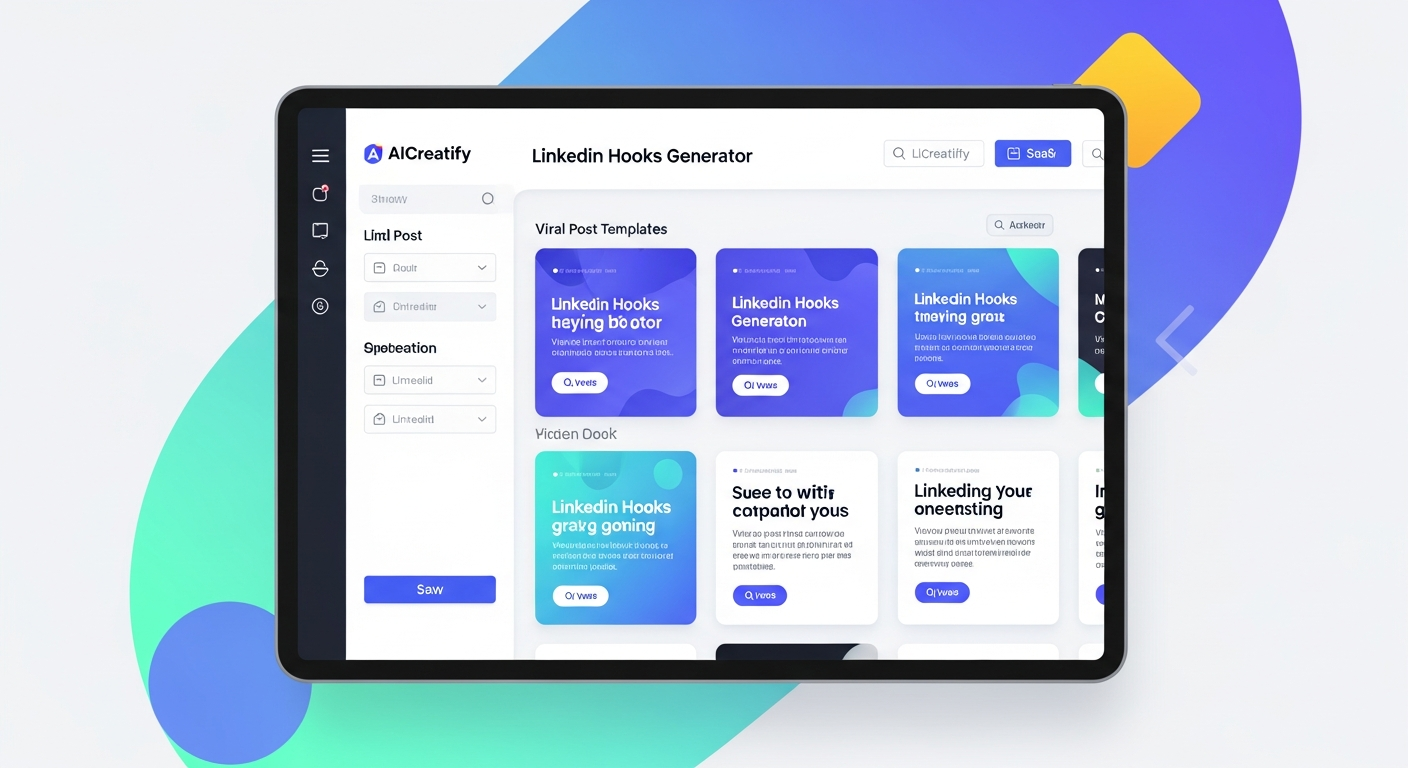
With a few clicks, AICreatify analyzes your input and generates a multitude of compelling hook options tailored to your needs. No more staring at a blank screen, losing precious minutes or hours.
From Prompt to Powerful Hook: An AICreatify Example
Imagine you want a hook for a post about securing a seed round for your SaaS. You input your key details…
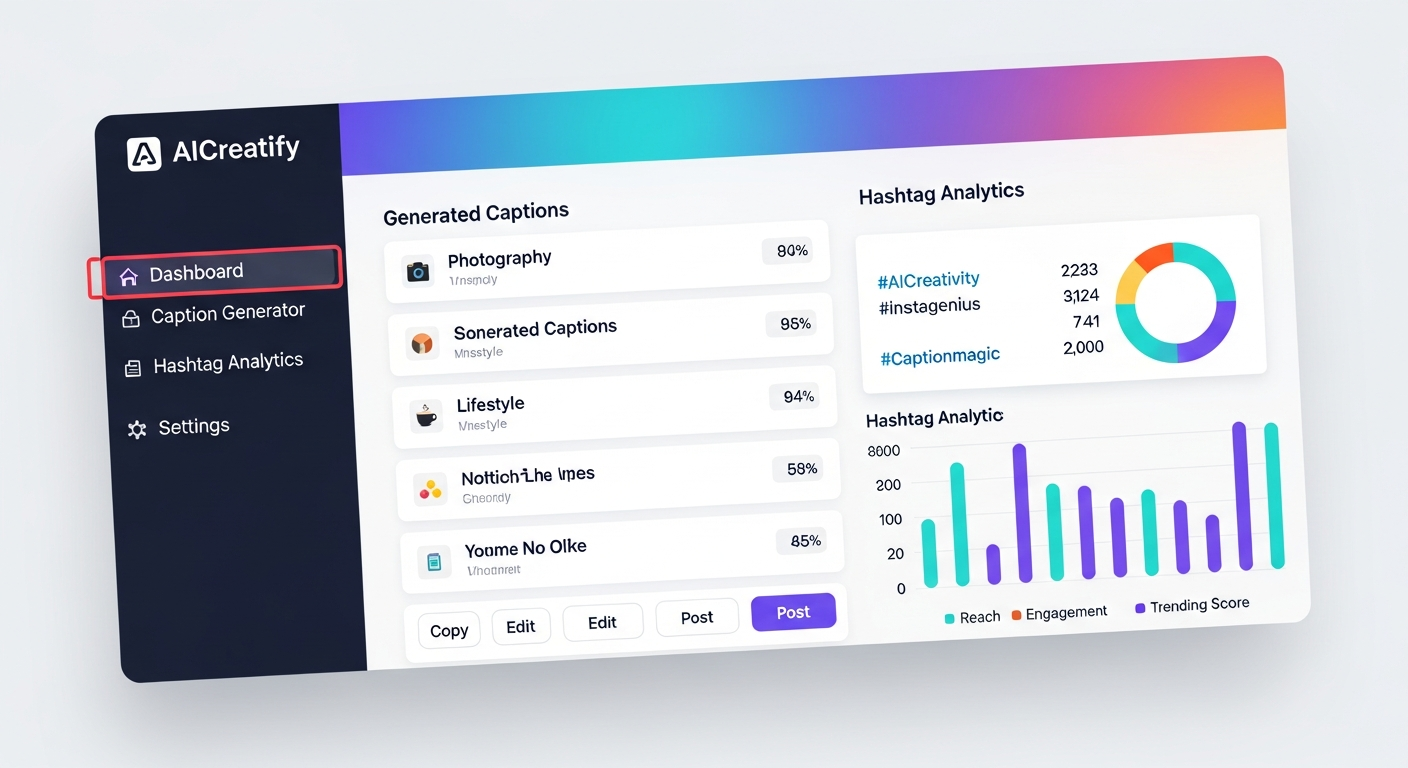
AICreatify provides multiple variations: a bold claim, an intriguing question, a personal story angle, a contrarian view. You pick the best fit, or effortlessly mix and match elements for a truly unique hook! It’s your personal brainstormer, your creative partner, available 24/7. Ready to try it yourself? Generate your next scroll-stopping hook with our LinkedIn Hooks for Founders tool – it’s free!
Customizing AI-Generated Hooks for Authenticity
AI is incredibly powerful, but human refinement is still the secret sauce. Take the AI’s brilliant suggestions and inject your unique voice, specific data, and personal flair. AI gives you the raw, potent material; you craft the unforgettable masterpiece. It’s a collaboration that elevates your content beyond what either could do alone.
Best Practices for Deploying Your LinkedIn Hooks
Don’t just set it and forget it. Maximizing impact requires active, strategic deployment.
Test A/B Your Hooks
Always be testing. Your audience is unique. What resonates with them might surprise you. Refer to our detailed steps above – make this a non-negotiable part of your workflow.
Follow Up with Value
A hook grabs attention. The rest of your post *must* deliver. Don’t disappoint your newly captured audience; give them the rich, insightful content they came for.
Consistency is Key
Regular, valuable posts build momentum, establish trust, and train your network to look for your content. Your audience expects you to show up.
Engage Back
Reply to comments. Send DMs. Build genuine relationships. LinkedIn is a social network, after all – not a broadcasting platform.
Optimize for Mobile
Most users scroll on their phones. Keep your hooks concise, your paragraphs short, and your content easily digestible on small screens. Read it on your phone before you post!
Common Mistakes Founders Make with LinkedIn Hooks (And How to Avoid Them)
Don’t fall into these traps. Learn from others’ missteps and accelerate your impact.
Being Too Salesy or Promotional
LinkedIn is about value, insights, and connection first. Your product sells itself *after* you’ve earned attention, built trust, and demonstrated undeniable value. Lead with solving a problem, not selling a widget.
Fix: Lead with value, problem-solving, or intriguing insight. Focus on educating or provoking thought.
Vague or Generic Openings
“Excited to share…” is a death sentence for engagement. It tells no one why they should stop their scroll. It’s bland, forgettable, and ineffective.
Fix: Be specific. Hook with a concrete problem, a bold, undeniable statement, or a direct, thought-provoking question.
Ignoring Your Audience’s Needs
Posting about what *you* want to say, not what *they* desperately need to hear. This is a common, fatal error. Your content isn’t for you; it’s for them.
Fix: Deeply understand your audience’s pain points, desires, and challenges. Speak directly to those, offering solutions or insights.
Inconsistent Messaging
One day you’re a SaaS expert, the next a fitness guru, the next an amateur chef. This confuses your network, dilutes your brand, and makes you forgettable.
Fix: Define your niche, own your expertise, and consistently provide value within that specific domain. Be the go-to expert for *one* thing.
Not Having a Clear Call to Action (Implicit or Explicit)
After reading your amazing post, what do you want them to do next? Don’t leave them hanging, wondering what the point was.
Fix: Always have a clear next step, whether it’s “Share your thoughts,” “Check out our beta,” “DM me for a demo,” or “Learn more here.” Guide their journey.
Conclusion
You’ve got the intel. You’ve got the examples. You’ve got the playbook. Strong LinkedIn hooks are no longer an option for founders; they are your competitive edge. They are the undeniable difference between being heard and being ignored.
Stop settling for invisible content. Start leveraging these 50 proven hooks, the advanced growth strategies, and the transformative power of AI tools like AICreatify to amplify your message, your mission, and your impact. It’s time to transform your LinkedIn presence, drive tangible startup objectives, and ultimately, grow your business. Go get ’em.
FAQs
What is a LinkedIn hook?
A LinkedIn hook is the critical first one or two lines of your post. It’s meticulously designed to grab the reader’s attention, instantly stop their scroll, and compel them to click “see more” or directly engage with your valuable content. It’s the gatekeeper to your message.
How long should a LinkedIn hook be?
To maximize its impact, a LinkedIn hook should be concise – ideally 1-2 sentences, or approximately 100-150 characters. This ensures it’s fully visible on most devices before the dreaded “see more” break, delivering its punch immediately.
Should founders use different hooks for different goals (e.g., fundraising vs. hiring)?
Absolutely, without a doubt. Your hook must always align precisely with your specific goal and target audience for that particular post. A hook for attracting investors might focus on undeniable traction and visionary market disruption, while a hook for hiring top talent would passionately emphasize culture, impact, and growth opportunities. Tailor it every time.
How often should I post on LinkedIn as a founder?
Consistency is paramount. Aim for 2-4 high-quality, high-value posts per week. More important than mere frequency, however, is delivering consistent, insightful value and actively engaging with your audience. Don’t post for the sake of posting; post with a clear, strategic purpose behind every single word.
Can AI tools like AICreatify fully replace manual hook writing?
AI tools like AICreatify are powerful accelerators, not replacements. They excel at generating diverse ideas, crushing writer’s block, and providing robust structural foundations at lightning speed. However, the most authentic, resonant, and impactful hooks often come from human refinement – injecting your unique founder’s voice, specific, proprietary data, and deeply personal experiences into the AI-generated suggestions. It’s a powerful collaboration, not a substitution.